
 MBBS abroad · Romania
01Overview
MBBS in Romania for Indian Students: Everything You Should Know
Six-year medical courses are offered in Romania in several cities such as Bucharest, Cluj-Napoca, Iași, Timișoara, Târgu Mureș and Constanța. MBBS in Romania for Indian students is offered in English to foreign students in some Romanian universities. On the official website of Study in Romania, Medicine courses are offered at Carol Davila University, Bucharest, Grigore T. Popa University, Iași, Victor Babeș University, Timișoara, among others.
It is important for an Indian student to note that the course offers a Doctor of Medicine (MD) degree, which is equivalent to MBBS. Before applying to any university, the course has to be evaluated on the basis of its curriculum, duration, clinical training, internship/clerkship programme and NMC regulation. MBBS in Romania fees are also affordable.
According to the NMC Foreign Medical Graduates Licentiate Regulations 2021, the duration of the foreign medical course has to be a minimum of 54 months, should be conducted in English, should contain the required medical subjects and clinical training and should also have at least a 12-month internship in the same foreign medical institution. NMC FAQ also mentions that the course, training and internship/ clerkship have to be conducted outside India in the same foreign medical institution.
02At a glance
MBBS in Romania at a Glance
| Parameter | Details & Specifications |
|---|---|
| Course Duration | 6 Years, including internship of 1 year |
| Medium of Instruction | English Medium |
| Annual Tuition Fees | ₹₹8.25–₹13.2 lakh per year |
| Cost of Living | ₹6.6 lakh – ₹11.90 lakh per year |
| Academic Intake | September |
| Global Recognition | WHO, NMC, FAIMER, and WDOMS |
| Academic Eligibility | Required: 10+2 with PCB The age should be 17 years or above Required: 50-60% in 10+2 with PCB NEET required |
| Entrance Exams | The entry tests are not required for MBBS in Romania for Indian students |
| NEET-UG Requirement | It is required for Indian students as per applicable regulations |
| To practise in India | Take FMGE or NExT, then a further 12-month Indian internship |
What does this mean for you: An MBBS in Romania degree is good for an aspiring medical student from India if he/she chooses a suitable number of WDOMS-accredited, NMC-compliant colleges offering MBBS education in English, and considers the total cost of 6-year study and living as a single investment.
These are just basic facts about the countries. The only figures you actually need to take into account are your personal score and budget.
03Why Romania
Why Choose Romania for MBBS
Study MBBS in Romania is a blend of European higher education, English-medium medical courses and well-established medical universities. Romania is also part of the European Union and the European Higher Education Area.
English medium medical courses
There are several Romanian universities that provide a six-year Medicine course in English for foreign students. Some of the universities include Carol Davila University, Iuliu Hațieganu University, Grigore T. Popa University and Victor Babeș University.
European medical education
The Romanian universities function in the Romanian and European higher education systems. As per Study in Romania, Romanian diplomas receive the advantage of being recognised in the European higher education system based on professional and regulatory standards.
Clinical exposure
The six-year course is generally divided between preclinical or basic medical sciences and clinical studies. The Victor Babeș course has three years of preclinical studies followed by three years of clinical studies.
Multiple university locations
There are multiple university locations for MBBS in Romania for Indian students instead of a single university location. Present English medium choices include Bucharest, Cluj-Napoca, Iași, Timișoara, Târgu Mureș and Constanța.
Location in the EU
The country joined the Schengen Area as a fully-fledged member on 1 January 2025. Yet, possession of a long-term study visa issued by Romania does not provide a student with automatic residence rights in other countries of the EU/Schengen region.
Comparison with Western Europe
Tuition and accommodation expenses may be lower in Romania than in most destinations in Western Europe, but an English-speaking medicine programme will remain expensive.
04Recognition
Is MBBS in Romania Valid in India?
Yes, it is true that an MBBS degree from Romania is accepted and valid in India. But it should be ensured that one complies with all the conditions laid down by the National Medical Commission (NMC), which has established certain rules and regulations for Indian students interested in MBBS from Romania.
The Five NMC Conditions, Checked One by One
Condition 1
The total MBBS in Romania duration should include 4.5 years (54 months) of study and 1 year (12 months) of clinical rotation in any recognised health institution.
Condition 2
The medium of instruction for an MBBS degree offered in Medical universities in Romania shall be in English and not any other native language of the region.
Condition 3
As per Schedule 1 of the NMC Gazette, an MBBS course shall cover all the essential subjects in medicine (over 19).
Condition 4
During the course duration of an MBBS degree, a 1-year (12 months) internship is a must at a recognised institution affiliated to the university.
Condition 5
For Foreign Medical Graduates (FMGs), it is mandatory to clear the medical licensing test, such as FMGE or NExT, to be eligible to practice as doctors in India.
Source: NMC (Foreign Medical Graduate Licentiate) Regulations, 2021. Binds students joining from 18 November 2021 onwards. See regulations here.
What this means for you: Do not ask your agent if a Romanian university is “NMC approved”. This is because NMC does not provide approval to any list of foreign medical colleges. Ask the university about the course period, English-language medium, practical training, internship, and eligibility for Romanian medical registration.
One condition we have not confirmed: The six-year programme offered by a university can have clinical years, clerkships and many more. You must define clearly the internship requirement as per the university, whether it forms part of the degree or not and whether it conforms to the Indian requirements.
Do These NMC Rules Apply to You?
It is important to note that these regulations will be applicable only to those students who have enrolled since 18th November 2021. The regulations will not apply to those who were enrolled prior to this date as per older regulations. On most pages, regulations are stated without any cutoff, thereby misleading many students halfway through their degrees.
The five NMC conditions, in the Gazette's own words
Each condition quoted from the 18 November 2021 notification itself, with the clause number, so you can hold a university's offer against the actual wording.
PDF 2 pages 2.7 KB
Sent to your email. No call unless you ask.
Will your NEET score be enough for MBBS in Romania?
Medical Universities in Romania require a minimum of 50% in PCB in Class 12 without having any NEET cut-off individually, but you need to be a NEET-UG qualified candidate to become a valid registered medical practitioner in India.
Not taken yet? Put in the score you expect — you can redo this later.
The PCB average, not your overall percentage.
Get your full report
- Your six-year cost in rupees, at today’s exchange rate
- The documents you need, and which need apostille
- Which recognised universities are worth your application
Your report is on the way.
A counsellor will go through it with you and answer anything the numbers leave open.
05Eligibility
MBBS in Romania Eligibility Criteria
You will need to have the qualifying marks in NEET, 50% marks in Physics, Chemistry, and Biology at the 10+2 stage (40% marks for SC, ST, and OBC candidates).
NEET is compulsory
It is important to note that without NEET qualifying marks, you cannot obtain a license in India.
PCB Criteria
You are required to have qualified with Physics, Chemistry, and Biology at 10+2. The average marks in PCB should be 50% and 40%, according to category, for MBBS admission in Romania.
Age
The candidate is required to be 17 years of age by 31 December of that admission year for MBBS in Romania eligibility.
Passport Validity
You are required to have a passport that covers the whole duration of the course.
So, if you meet all these four criteria, then you are eligible to apply. Whether or not your marks qualify as per NEET cut-off is a different story altogether – use the eligibility calculator.
Meeting the criteria is one aspect. Knowing which universities accept your NEET score is another matter.
06Admission
MBBS in Romania Admission Process
- Confirm your eligibility as a NEET candidate and as a foreign graduate according to NMC regulations before handing over any money to agents and booking seats for MBBS admission in Romania.
- Create a list of universities in Romania that offer accredited medical education programs and whose structure is clearly defined.
- Find out what admission requirements the particular university demands from its students. Generally, this means Grade 12 grades, science subjects, proficiency in English, and an institutional test/interview.
- Submit an application through the university’s admission system online. Pass the entrance test/interview, if needed. Obtain an admission letter.
- Get your residence/student visa for Romania via the university or via the relevant Romanian authorities.
- Pay the MBBS fees in Romania directly to the university. Never pay the tuition fees into the agent’s personal bank account.
Before anything is submitted anywhere
- We check your marks against the NMC rules first
- You get the full six-year cost, not a first-year figure
- Nothing goes to a university without your say-so
07Intakes
MBBS in Romania Admission Intakes
Almost all medical universities in Romania have only one main intake each year during autumn (September/ October).
| Intake | Application Window | Session Starts |
|---|---|---|
| Autumn | May - July | September/October |
What this means for you: Consider the beginning of October as the only period for submitting applications to be enrolled on the right programme. Make sure to apply before the deadline announced.
08Paperwork
Documents Required for MBBS in Romania
These two sets of documents need to be looked into for MBBS in Romania for Indian students: one is the set of documents that you possess and will be verified by the university for the purpose of applying to the university; and the other is the set of documents you need for residing in Romania and getting admitted to the university.
- ✓Valid passport
- ✓Tenth and twelfth certificates/marks sheets
- ✓NEET Score Card (Indian students)
- ✓Birth certificate, wherever necessary
- ✓Fitness Certificate
- ✓Report of HIV test, wherever necessary
- ✓Passport-sized photographs
- ✓Application form
What this means for you: The sequence of the steps is more important than the checklist. The sequence needs to be followed strictly, and not following it is the reason why your application gets rejected most often.
Send us what you already have, and we will tell you what is missing.
09Universities
NMC & WHO Recognised Medical Colleges in Romania
It is necessary to mention that the course that Indian students choose to pursue in medical colleges of Romania should be in line with the criteria set by the NMC for international candidates. This is what makes institutes NMC approved medical colleges in Romania.
Institutional and course recognition procedures are established by the Romanian higher education authorities. These include an automatic recognition program carried out by the Ministry of Higher Education and Scientific Research, which encompasses the following Romanian educational institutions.
The following universities offer undergraduate medical programs for Indian students.
A Closer Look at Six Medical Institutions in Romania
Here is a closer look at six medical schools in Romania from the WDOMS/ECFMG list.
01Carol Davila University of Medicine and Pharmacy
- Established Year
- 1857
- City
- Bucharest
- Avg. Tuition Fee
- €10,000/year for the 2026–27 English programme*
- Course Duration
- 6 years
- Taught in
- English
- Seats
- 300
- Intake
- September
- FMGE Passing Rate
- 0%
- Listed in WDOMS
- Yes
- University Type
- Public
Note: According to the university’s 2026-2027 methodology, the English-language program for international students is confirmed, while on the Romanian government Study in Romania portal, the cost is stated at €7,500 per year, which seems inconsistent and requires verification.
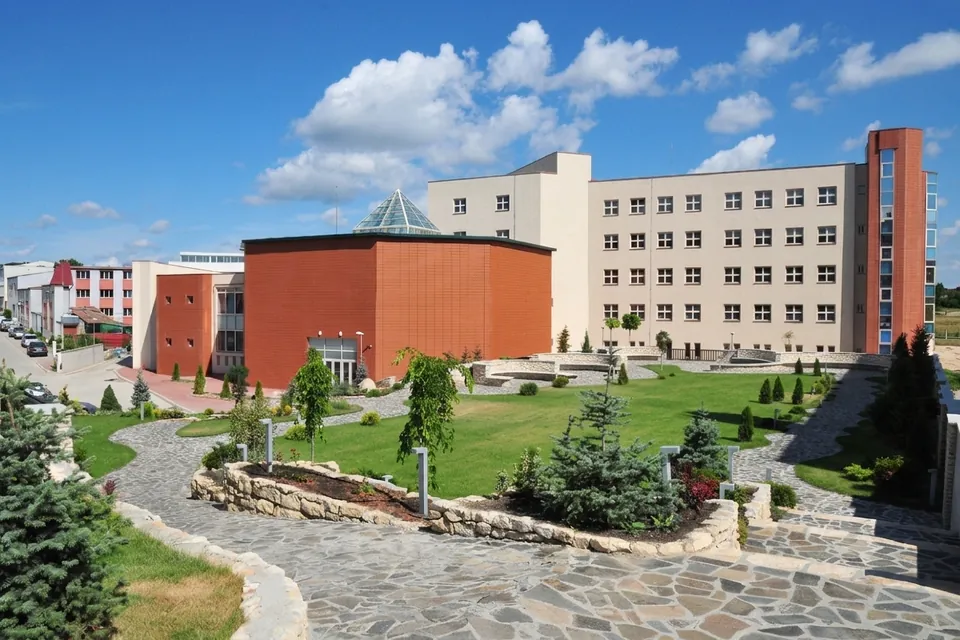
02Iuliu Hațieganu University of Medicine and Pharmacy
- Established Year
- 1919
- City
- Cluj-Napoca
- Avg. Tuition Fee
- €10,000/year
- Course Duration
- 6 years
- Taught in
- English
- Seats
- 200 English Medicine places
- Intake
- September
- FMGE Passing Rate
- -
- Listed in WDOMS
- Yes
- University Type
- Public
Note: This course will provide 360 ECTS points to students. MBBS in Romania fees at this university are low.
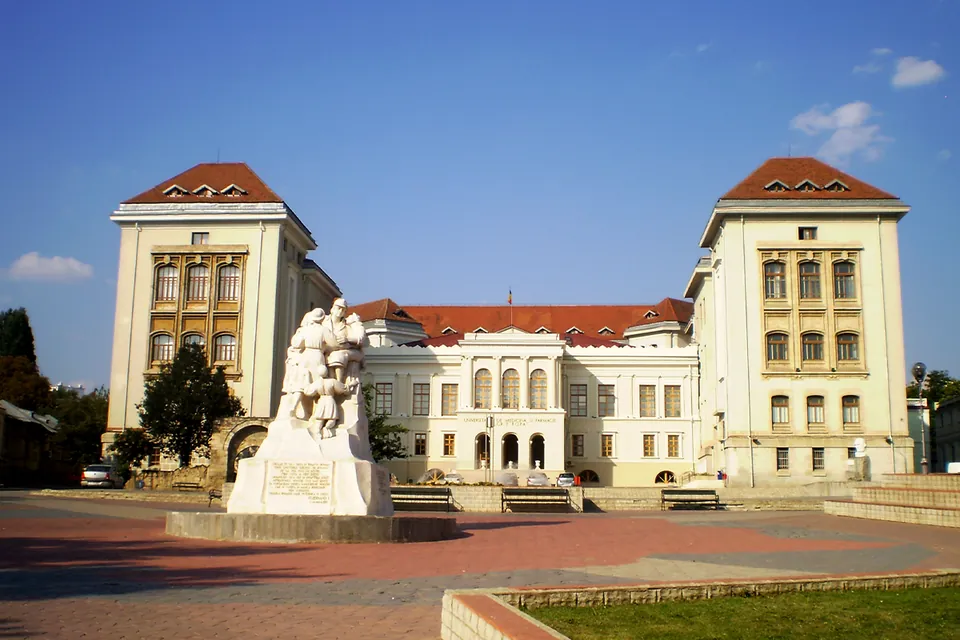
03Grigore T. Popa University of Medicine and Pharmacy
- Established Year
- 1879
- City
- Iași
- Avg. Tuition Fee
- €9,000/year
- Course Duration
- 6 years
- Taught in
- English
- Seats
- 200 English Medicine places
- Intake
- September
- FMGE Passing Rate
- 50%
- Listed in WDOMS
- Yes
- University Type
- Public
Note: According to WDOMS, the teaching at the medical school started in 1879. The authoritative source Study in Romania confirms that there was a 6-year English Medicine programme.
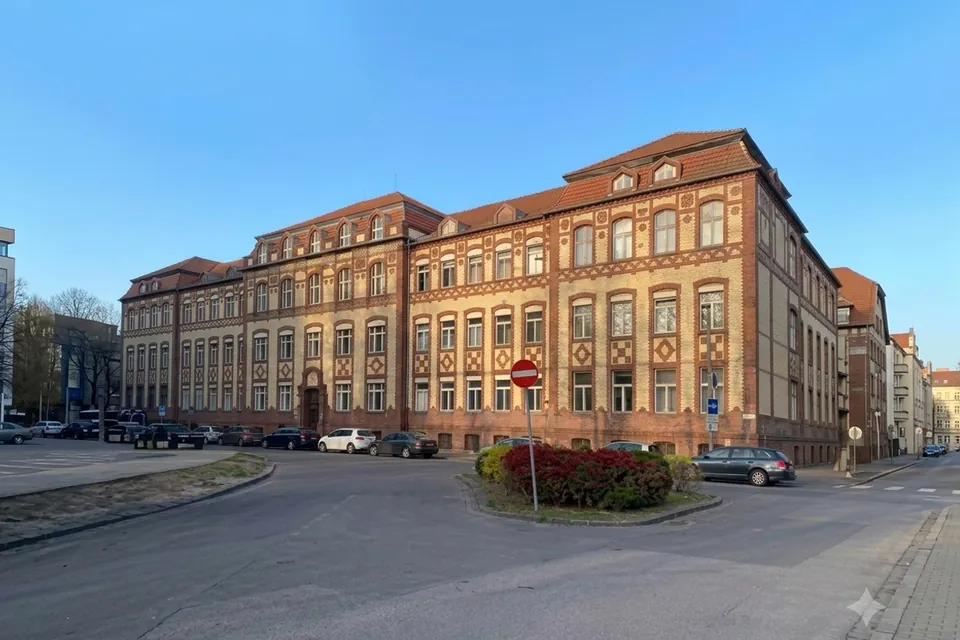
04Victor Babeș University of Medicine and Pharmacy
- Established Year
- 1945
- City
- Timișoara
- Avg. Tuition Fee
- €8,500/year
- Course Duration
- 6 years / 360 ECTS
- Taught in
- English
- Seats
- 160 English Medicine places
- Intake
- September
- FMGE Passing Rate
- 0%
- Listed in WDOMS
- Yes
- University Type
- Public
Note: The Faculty of Medicine started its operations in 1945. The year when instruction for the medical school commenced, according to WDOMS, is 1948.
05George Emil Palade University of Medicine, Pharmacy, Science & Technology
- Established Year
- 1945
- City
- Târgu Mureș
- Avg. Tuition Fee
- €10,000/year
- Course Duration
- 6 years / 360 ECTS
- Taught in
- English
- Seats
- 150 English Medicine places
- Intake
- September
- FMGE Passing Rate
- 25%
- Listed in WDOMS
- Yes
- University Type
- Public
Note: Medical training in Targu Mures started in 1945. After that, the institute became the Medical-Pharmaceutical Institute in 1948 and was called the University of Medicine and Pharmacy in 1991 for MBBS in Romania.
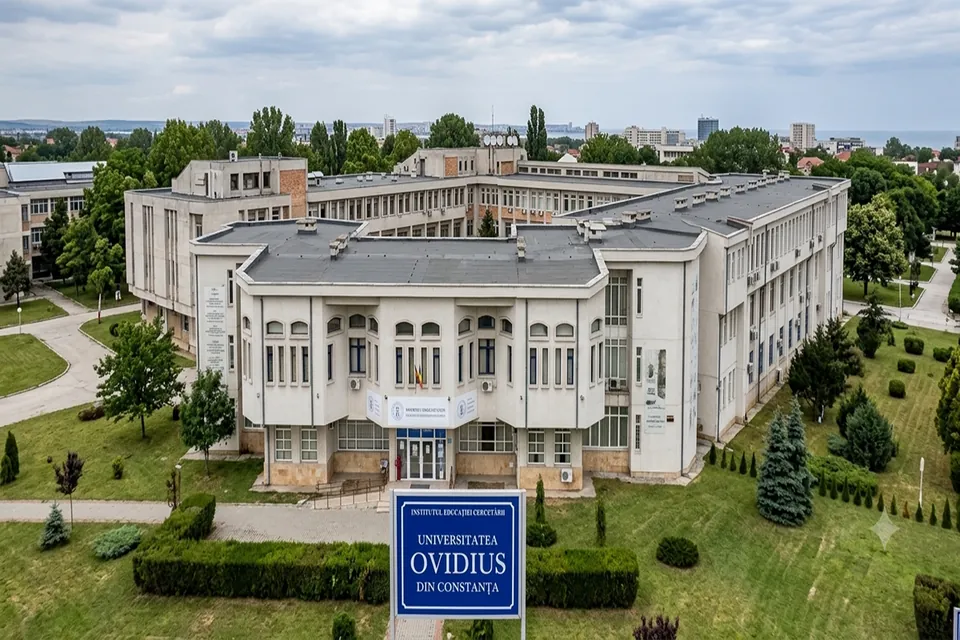
06Ovidius University
- Established Year
- 1961
- City
- Constanța
- Avg. Tuition Fee
- €8,000/year†
- Course Duration
- 6 years / 360 ECTS
- Taught in
- English
- Seats
- 110 English Medicine places
- Intake
- September
- FMGE Passing Rate
- 34%
- Listed in WDOMS
- Yes
- University Type
- Public
Note: Ovidius University was founded in 1961 and became a comprehensive university in 1990. WDOMS lists the beginning of instruction at the Faculty of Medicine as 1990.
The Official List of MBBS Universities in Romania— 6 Universities →
Not sure which of these fits your score and your budget?
10Fees
MBBS in Romania Fee Structure
The table below shows the cost university by university — MBBS in Romania fees and hostel per year, and the total for the full course. It is to note that actual fees can vary.
University-wise MBBS in Romania fees
| University Name | City | Avg. Annual Tuition Fee | Total Tuition Cost Across 6 Years |
|---|---|---|---|
| Carol Davila University of Medicine and Pharmacy | Bucharest | €10,000 | €60,000 |
| Iuliu Hațieganu University of Medicine and Pharmacy | Cluj-Napoca | €10,000 | €60,000 |
| Grigore T. Popa University of Medicine and Pharmacy | Iași | €9,000 | €54,000 |
| Victor Babeș University of Medicine and Pharmacy | Timișoara | €9,000 | €54,000 |
| George Emil Palade University of Medicine, Pharmacy, Science & Technology | Târgu Mureș | €10,000 | €60,000 |
| Ovidius University | Constanța | €8,000 | €48,000 |
| University of Medicine and Pharmacy of Craiova | Craiova | €8,500 | €51,000 |
| Lucian Blaga University of Sibiu | Sibiu | €6,000 | €36,000 |
| University of Oradea – Faculty of Medicine and Pharmacy | Oradea | €6,000 | €36,000 |
| Dunărea de Jos University of Galați | Galați | €6,000 | €36,000 |
| Titu Maiorescu University | Bucharest | €12,000 | €72,000 |
| Vasile Goldiș Western University of Arad | Arad | €11,000 | €66,000 |
Note: These total 6-year figures are simply the tuition multiplied by 6 years; it does not take into account application fee, deposit, housing, food, insurance, visa fees, textbooks, etc. It’s just the tuition figures. The bottom line for an Indian student is going to be significantly different when one adds in accommodation and living costs.
Other Costs on Top of Tuition
| Expense Category | Avg. Value in EUR | Avg. Value in INR |
|---|---|---|
| Medical Insurance | €200 | ₹22,000 |
| Admission/Registration Charges | €8,800–€10,800 | ₹9–11 lakh+ |
| Air Travel (6 Years) | €3,500–€6,500 | ₹3–7 lakh |
| Visa Extension Fee | €100 | ₹11,000 |
| Accommodation/Hostel | €80–€300/month | ₹9,000–₹33,000/month |
| Food & Groceries | €150–€300/month | ₹17,000–₹33,000/month |
| Utilities | €40–€120/month | ₹4,500–₹13,000/month |
| Local Transportation | €20–€40/month | ₹2,200–₹4,500/month |
| Mobile & Internet | €20–€40/month | ₹2,200–₹4,500/month |
| Books & Study Materials | €200–€300/year | ₹22,000–₹33,000/year |
| Personal Expenses | €50–€100/month | ₹5,500–₹11,000/month |
Note: These are rough estimates. Costs will differ depending on the university you go to, the city you stay in, the kind of accommodation you choose, and how you live your life. The official Romanian study website provides estimates for accommodation costs between €60-€85/month (university dormitory) and €130-€300+/month (private housing), and food costs between €100-€300+.
Most families fund this with an education loan against an NMC-recognised seat.
Cost of Living in Romania
Living costs in Romania do not depend on tuition fees, as they will vary according to where one lives, the type of housing, eating habits, and personal preferences. The monthly expenses of students are expected to be as follows:
| Expense Category | Approx. Monthly Cost in EUR | Approx. Monthly Cost in INR* |
|---|---|---|
| Hostel / Shared Accommodation | €80–€300+ | ₹9,000–₹33,000+ |
| Food & Groceries | €150–€300 | ₹17,000–₹33,000 |
| Local Transport | €20–€40 | ₹2,200–₹4,500 |
| Mobile & Internet | €20–€40 | ₹2,200–₹4,500 |
| Personal Expenses | €50–€100 | ₹5,500–₹11,000 |
| Utilities & Miscellaneous | €40–€120 | ₹4,500–₹13,500 |
Note: The actual MBBS in Romania fees comprise the above costs. Indicative conversion with €1 ≈ ₹110. Rates may be different. Cost of living is highly dependent on the city where the university is located, type of accommodation, and personal lifestyle.
What this means for you: University accommodation is usually cheaper than other types of accommodation. Additionally, students should allocate funds for one-off payments like application fees, visa and residence permit costs, medical insurance, etc.
11Funding
Scholarships for MBBS in Romania
Romania fees for the MBBS program can be quite costly for Indian students, but some Romanian universities providing medical courses have special scholarships or fee reductions for their MBBS course programs. While some institutions offer scholarships for MBBS in Romania for Indian students to outstanding students on merit, others give financial need scholarships or tuition reductions. These scholarships may pay for only a portion of the tuition cost and are given on an annual basis.
Government Scholarships
Scholarships provided by the government to study medicine in Romania are usually bound by some conditions that have to be fulfilled, such as citizenship, academic standing, study level, and the scholarship program itself. Indian students need to make sure that the selected Romanian government scholarship program is available to foreign undergraduate medical students and that the MBBS/MD program qualifies under this scholarship.
University Scholarships
Scholarships awarded by Romanian universities could differ from one university to another. This will depend on the particular university and the course that the applicant wants to study, and this scholarship could be based on factors such as academic performance, merit, financial need, or others.
Merit scholarships
Could be awarded to students with good academic performance, depending on university policy.
Performance scholarships
Universities may offer financial help to students who do very well academically while studying.
Financial/social support
Some universities may have support schemes for students with particular financial or social needs.
International student scholarships
Could vary from university to university and country to country.
What they typically cover. Scholarships for MBBS in Romania for Indian students may provide for partial or, in some instances, full tuition or education costs, based on the program being offered. Scholarships do not automatically provide for personal costs including accommodation, visa fees, meals, or other expenses except where explicitly stipulated in the scholarship requirements.
What this means to you: For students intending to study MBBS in Romania, it is important not to make any plans based on the assumption that one would receive a scholarship to study abroad. Scholarships should only be taken into account as a bonus and thoroughly researched for requirements.
Education Loan for MBBS in Romania
As medical education is expensive in many countries, Indians pursuing their education abroad may also opt for study abroad loan schemes offered by banks and other financial institutions that offer loans for pursuing education abroad. The criteria for such loans include the following: the lender; the university/degree; total loan amount; collateral; income of the applicant/co-applicant; and credit score.
What banks ask for
Banks usually ask for offer/admission letter, 10th and 12th marksheets, your NEET scorecard, passport/visa, income certificate of co-applicant and 6 months of bank statements, security papers as per the requirement of the amount of loan.
What a loan usually covers
The loan usually covers tuition fees, hostel/accommodation fees, insurance and compulsory fees, flight fare, books, equipment and laboratory fees. Cost of living may sometimes be covered by some financial institutions.
Factors to consider before signing for MBBS
The availability of scholarships and terms of loans can differ between universities, academic years, and lenders. Students are advised to consult directly with the universities and financial institutions about the prevailing conditions.
12Course
MBBS in Romania Course Duration & Syllabus
It is important to note that Romania medical schools do not have a standard national MBBS course. Different universities have different structures for undergraduate medical programs, and some universities award the MBBS degree while other universities award the MD degree. There are many universities in the Romania which offer six-year undergraduate medical courses complies with the NMC guidelines.
Non-negotiable in relation to meeting the NMC standards: According to the NMC guidelines, the taught course should be for a minimum of 54 months, the entire program should be completed in ten years of enrollment, and the internship should be completed in the same institution abroad.
Course length varies by university, and it determines whether your degree satisfies the 54-month rule.
Medium of Teaching
Indian students do not have to worry, as most medical universities in Romania offer dedicated English-medium programmes, lectures, and practicals for easier understanding by all students. Exams are also conducted in English. However, interacting with local patients requires learning the language of your region for smooth communication and to perform medical procedures.
What this means for you: You can consider "English-medium" to be the language of academic instruction. While on clinical training, one may use several languages, and therefore it will be helpful to improve communication skills.
When verified by the university: Students are required to verify which programmes need English-language certification, which scores are acceptable, and whether there are other language requirements during clinical training.
Language is the thing graduates most often say they underestimated.
Curriculum Highlights
The Medicine (MD) programme in Romania usually consists of six years of study. Students start their education in basic and foundational medical sciences and then continue in preclinical and clinical medical disciplines.
The list of courses, order of study, clinical rotations, and elective courses may be different in various Romanian medical universities.
MBBS in Romania Curriculum — Year-Wise
| Year | Phase | What You Study |
|---|---|---|
| Year 1 | Basic Medical Sciences | Anatomy, Histology, Physiology, Biochemistry, Cell Biology, Genetics, Medical Biology, Medical Terminology, Introduction to Medicine |
| Year 2 | Basic & Preclinical Sciences | Anatomy, Physiology, Biochemistry, Microbiology, Immunology, Genetics, Pathology, Pharmacology, Public Health |
| Year 3 | Preclinical / Core Medical Sciences | Pathology, Pharmacology, Microbiology, Immunology, Clinical Skills, Epidemiology, Community Medicine, Research Methods, Introduction to Clinical Medicine |
| Year 4 | Integrated Medical Sciences | Cardiovascular System, Respiratory System, Gastrointestinal System, Renal System, Endocrinology, Nervous System, Musculoskeletal System, Clinical Skills and Diagnostic Methods |
| Year 5 | Clinical Sciences / Clinical Rotations | Internal Medicine, General Surgery, Paediatrics, Obstetrics & Gynaecology, Psychiatry, Family Medicine, Emergency Medicine and Other Clinical Rotations |
| Year 6 | Advanced Clinical Training | Internal Medicine, Surgery, Paediatrics, Obstetrics & Gynaecology |
Is MBBS in Romania Taught in English?
Yes, an MBBS in Romania is taught in English only to its international students, helping Indian students overcome any linguistic hurdles. But English-taught does not necessarily mean that Romanian is an unimportant language. In clinical teaching, for instance, Romanian will be required to talk to patients and hospital personnel. The faculty of medicine in Cluj specifies that in the clinical year, international students make use of Romanian. So, the local language is also taught along with the regular course so that the students can effectively communicate with people during exposure and daily life.
13Comparison
MBBS in Romania vs India and Other Countries
| Feature | Romania | India | Russia | Georgia |
|---|---|---|---|---|
| Duration | 6 Years (5+1) | 5.5 Years (4.5+1) | 6 Years (5+1) | 6 Years (5+1) |
| Total Cost | ₹40-₹55 lakh | ₹20-₹50 thousand (government); ₹50-₹90 lakh (private) | ₹30-₹40 lakh | ₹35-48 lakh |
| Teaching Language | English-medium | Local Language | English-medium | English-medium |
| Entrance Requirements | NEET & PCB qualification required | NEET & PCB qualification required | NEET & PCB qualification required | NEET & PCB qualification required |
| To Practise In India Rules | Qualification of NEET-UG; meets NMC requirements and passes the FMGE/NExT | Meet NMC guidelines, participate in MCC counselling | Qualification of NEET-UG; meets NMC requirements and passes the FMGE/NExT | Qualification of NEET-UG; meets NMC requirements and passes the FMGE/NExT |
Note: It is important to note that all figures above for MBBS in Romania vs India are estimates only. It may vary depending upon the actual institution. Duration of the courses may differ from institution to institution, but it should adhere to the guidelines set out by the NMC to pursue practice in India. Entry requirements may also vary depending upon the institution's rules and regulations. All classes are in English, but students learn the local language to interact with patients. NExT is not implemented in India.
What this means for you: Students should make the comparison of Romania with other countries in terms of recognition, language, and overall cost in Indian rupees; the licensing test in India remains constant.
The right comparison is against the other countries your score actually opens.
14After graduation
Career Pathways After MBBS in Romania
Graduation with a Romanian medical qualification opens up various possible career paths, but the qualification in itself does not necessarily entitle someone to a license in all countries. Below are career paths to follow if a person is pursuing a medical practice in India:
- Students are required to complete the 6-year MBBS programme in Romania
- Get the basic medical qualification from the college
- Pass the FMGE/NExT exam, then undertake mandatory internships
- Get registered with the NMC or the State Medical Councils
Constraint that is not covered on any other website: You should note that whatever path one chooses, the process of following the path will be the same for all countries - fulfilling the licensing requirements. For one to practise in his/her country of preference, he/she must fulfil all licensing requirements.
What this means for you: Candidates need to prepare for a 6-year process to become doctors in their chosen countries. The licensing process may vary from country to country and may incur extra costs.
These are the rules as written, not a sales pitch. Ask before you commit six years.
Romania MBBS offers four paths. Only one of them is the path most Indian graduates follow.
Returning to Practice in India
According to NMC, FMGs covered under the 2021 regulations must pass the required FMGE/NEXT exam. The student needs to comply with the necessary NMC requirements, pass the examination required by NMC, and undergo the Indian internship/registration procedure where required.
Remaining in Romania
Any graduate who wishes to practice in Romania needs to satisfy the Romanian requirements for professional registration/licensing.
Moving to another EU member state
While an EU medical qualification can help in gaining mobility within the EU, recognition and registration do not necessarily mean the right to practice in the destination country. The relevant professional regulator in the destination country needs to be consulted.
Moving to the EU, UK, or US
The graduate needs to satisfy the licensing requirements of the destination country, which could include examinations, verification of credentials, language criteria, etc.
15The other side
Pros & Cons of Studying MBBS in Romania
An MBBS in Romania provides a European style of clinical training in its medical courses at reasonable to medium fees. But there are some factors that need to be taken into consideration before deciding to move forward with your educational pursuits.
Pros
- Many seats for Indian students.
- Offers English-medium programmes
- Up-to-date Modern healthcare infrastructure.
- Smaller class sizes in batches
- Several universities listed in WDOMS
- Mainly offers NMC-compliant medical programmes
Cons
- Exchange-rate fluctuations affect Indian families.
- Medical seats are fewer for foreign students
- The admission requirements differ by university.
- Degree recognition can vary from country to country
- Tuition fees are high here in comparison to Russia and Georgia
Why we publish this: many websites offering information on this topic only focus on the positive aspects of it, without much thought of the reality. Mentioning pros and cons will help you to make a better decision regarding your education, which may save a lot of money for you in future.
Still weighing it up? Ask the awkward questions before you commit, not after.
16FAQ
MBBS in Romania FAQs
Is a Romanian MBBS degree valid in India?
Romanian medical degree is not automatically recognised in India. The Indian candidate has to fulfil the eligibility criteria of the NMC as applicable for admission, qualification, training and internship.
Is NEET compulsory for MBBS in Romania Eligibility?
Indian students/OCI candidates planning to pursue their primary medical education abroad will need to have NEET qualification for MBBS in Romania eligibility as per Indian guidelines.
What is MBBS in Romania duration?
Typically, all Medicine courses taught in English, described on this page, are six-year and 360 ECTS curriculum. Six-year programs are listed by Carol Davila, Iași and Timișoara universities.
What is the fee structure for MBBS in Romania?
The fees of NMC approved medical colleges in Romania can be seen as follows: Carol Davila charges €10,000/year; Iași charges €9,000/year; Victor Babeș €8,500/year; Târgu Mureș charges €10,000/year; and Ovidius charges €7,500/year.
Is there MBBS in Bucharest for Indian students?
Yes. The Medicine programme (six-year duration) in English for international students is offered by Carol Davila University. The tuition fee for international students in the English Medicine programme in 2026-2027 is €10,000/year.
Is MBBS in Cluj-Napoca available in English?
Yes. The Medicine programme (six-year duration) in English for international students is offered by Iuliu Hațieganu University. The number of places in English Medicine for the 2026 admission is 200.
Is MBBS in Romania taught completely in English?
The educational programme may be taught in English; however, students need to know that patients will not always communicate in English. Some universities require or encourage using the Romanian language during clinical practice.
Is there MBBS in Romania without NEET?
An overseas institution may have its own requirements for admission; however, the Indian student who intends to get MBBS admission in Romania must comply with the NEET requirement.
Is there any Romanian medical college that is NMC approved?
“NMC approved” should not be used. There isn’t any NMC-approved list of foreign medical colleges. The actual issue should be whether the given foreign qualification and course comply with the NMC guidelines.
Do Indian students require a visa for Romania?
Indian students who are non-EU nationals will have to get the right visa from Romania for studies at medical universities in Romania.
Still got more questions to ask?
17Ask us
Ask a Question About MBBS in Romania
If you want to know more about the MBBS program in the Romania from a professional counsellor, provide the following information below to make an appointment without any cost.
Your name, mobile and email — the NEET score is optional. Submit your details below, and we will get back to you during working hours.
Thank you! We have your details.